
Standing Again Before the World: The Two Pagodas of Bulguksa
During the 2025 APEC Summit, Korea’s cultural heritage briefly stepped into the international spotlight when the spouses of world leaders visited Bulguksa Temple in Gyeongju. Among them was Diane Carney, wife of Canadian Prime Minister Mark Carney, who toured the temple grounds under the guidance of Korea’s First Lady, Kim Hye-kyung. What drew my eyes most was the moment they paused before Seokgatap and Dabotap—two stone pagodas standing in serene silence as a monk shared their history.
For many Koreans like myself, these pagodas are far more than ancient structures. They are symbols rooted in memory, stories passed passed down across generations. Seeing them on the news stirred something quiet inside me, like hearing a familiar song after a long time away from home.
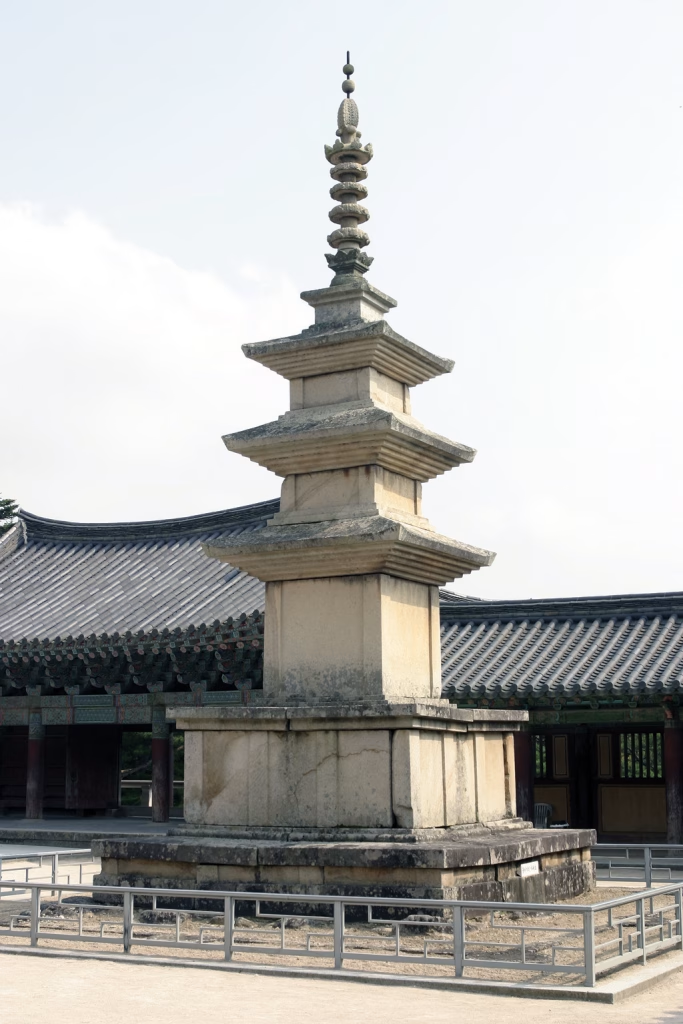
Seokgatap (Pagoda of Shakyamuni), Bulguksa Temple, Gyeongju. Image source: Cultural Heritage Administration, National Heritage Portal.
From Stupa to Stone Pagoda: A Journey Across Cultures
The Buddhist pagoda traces its origins to the stupa of ancient India—a hemispherical mound built to enshrine the Buddha’s relics. As Buddhism traveled along the Silk Road and entered China, the structure transformed into wooden and brick towers. When it reached Korea, it met a land rich in granite and artisans skilled in stone masonry. Out of this encounter emerged something uniquely Korean: the stone pagoda.
This evolution shows how shared beliefs adapt to local materials and aesthetics. In Korea, the stone pagoda became one of the clearest expressions of Buddhist architecture and spiritual devotion.
Why Were the Pagodas Built?
Bulguksa Temple was first founded in 528 CE during the Silla Kingdom, dedicated by Lady Yeongje, mother of King Beopheung, as Buddhism began to take root as a state religion. After the unification of the Three Kingdoms, the statesman Kim Dae-seong led a grand reconstruction. Legend says he built Bulguksa to honor the parents of his previous life, and Seokguram Grotto for the parents of his present one. Reconstruction began in 751 and was completed in 774, long after his passing.
The iconic pagodas—Seokgatap and Dabotap—were completed during this flourishing era of Buddhist art and culture. They embodied both spiritual aspiration and national pride.
Seokgatap and Dabotap: A Study in Contrast
Though they stand side by side, the two pagodas could not be more different in style. Their pairing is rooted in the Lotus Sutra, where the Buddha Shakyamuni delivers a sermon in the presence of the Buddha of Many Treasures.
Seokgatap (National Treasure No. 21) stands about 10.4 meters tall. With its two-tier base and three-story tower above, its 1:2:4 proportions create a calm and balanced silhouette. Unadorned and quietly dignified, it became the model for later Korean stone pagodas.
Dabotap (National Treasure No. 20), by contrast, is ornate and intricate. Resting on an octagonal base, it features railings, stairways, and layered ornaments culminating in a detailed finial. Its form symbolizes the Pagoda of Many Treasures described in scripture.
Sadly, Dabotap also carries the marks of colonial plunder—dismantled during the Japanese occupation, with many artifacts taken and never returned.
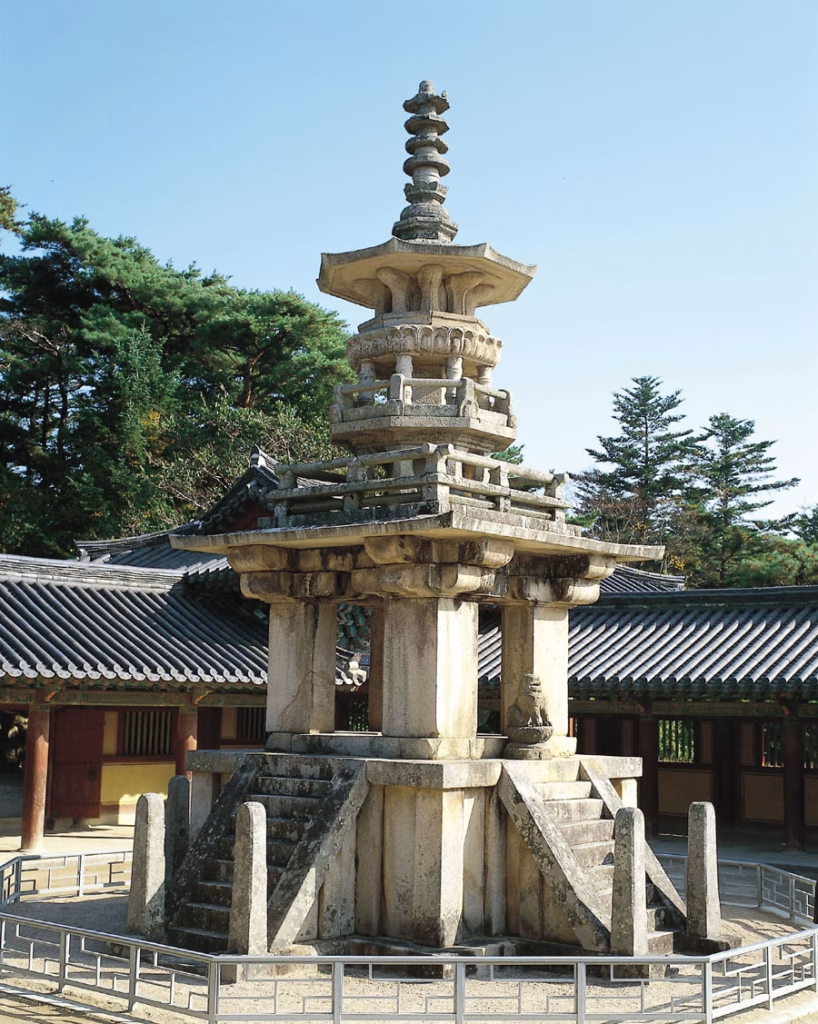
Dabotap (Pagoda of Many Treasures), Bulguksa Temple, Gyeongju. Image source: Cultural Heritage Administration, National Heritage Portal.
A Cultural Treasure Beyond Borders
Watching these pagodas featured on the global stage reminded me of the awe I felt standing before the Parthenon in Athens. Though built on different scales and in different materials, they share a universal language—one that transcends time and place. Seokgatap and Dabotap are prayers carved into stone, embodying devotion, geometry, and a quiet longing for harmony.
Just as Korean food—like tteokbokki or kimchi stew—has found its way into hearts around the world, these pagodas too deserve global appreciation. They are not only Korea’s treasures but part of our shared human heritage.
A Hidden Gift Within the Stones
During restoration in 1966, Seokgatap revealed an extraordinary discovery: the world’s oldest known woodblock-printed text, the Mugujeonggwang Daedaranigyeong (Great Dharani Sutra), along with other relics. This moment elevated the pagoda’s significance far beyond architecture, opening a window into the spiritual and print culture of ancient Korea.
Further Reading
If you’d like to explore more stories about Korean art and heritage, you may enjoy my reflections on Korean Buddhist art, including my personal journey with the Ten Ox-Herding Pictures.
Official Sources
More detailed information about Seokgatap and Dabotap can be found at the Cultural Heritage Administration of Korea:
https://www.heritage.go.kr
Bulguksa Temple is also listed as a UNESCO World Heritage Site:
https://whc.unesco.org/en/list/736
Thank You for Reading
If you enjoyed this story, feel free to explore more reflections on Korean culture, history, and life here at Maple Log. Your visit means a lot, and I hope these stories offer a moment of connection across time, place, and memory.