
If you’ve watched a K-drama or two, you’ve probably seen this scene:
Movers leave, boxes are stacked, and a family sits on the floor eating black noodles straight from plastic containers — on top of a newspaper.
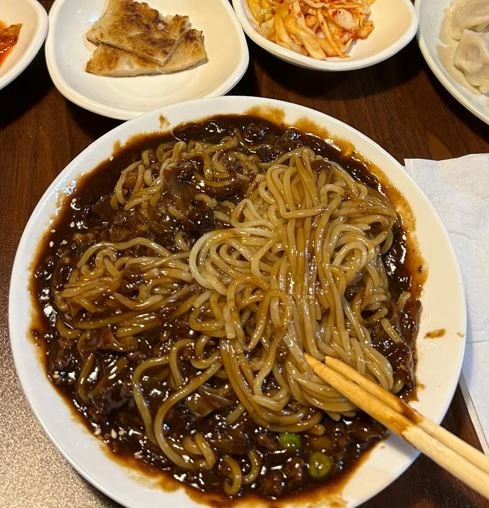
That dish is called jjajangmyeon, a Korean-style black bean noodle.
And yes — eating jjajangmyeon on moving day is a very real thing in Korea.
But for many of us, jjajangmyeon was more than just moving-day food.
For me, it was a childhood reward — a treat I earned after acing a test.
It was our go-to meal after school entrance ceremonies or graduation day, when no one wanted to cook but everyone wanted to celebrate.
And it was always something special — especially when we’d visit Chinese restaurants where noodle chefs hand-pulled each strand right behind a fogged-up kitchen window.
The chewy texture, the deep flavor of the black bean sauce… it’s a taste that stays with you.
💔 A Taste of Sacrifice
Even in Korean pop culture, jjajangmyeon is often tied to memories of love and sacrifice.
In 1998, a popular group called g.o.d released a song titled “To My Mother”, which became iconic for its deeply emotional lyrics.
The song recalls a moment when the child begged for something delicious,
and the mother took them to a restaurant — ordering just one bowl of jjajangmyeon.The line “Mother said she didn’t like jjajangmyeon” repeats like a quiet ache,
revealing that she gave up her share so her child could eat.
That line always made my throat tighten.
It’s a simple dish — but so often, it carries the weight of a mother’s quiet sacrifice.
🌏 From Chinese Roots to Korean Icon
In Korea, jjajangmyeon became more than a dish — it became a cultural icon.
Though it originated from Chinese immigrants in Korea, it was gradually adapted to suit Korean palates and eventually evolved into a distinctly Korean take on Chinese cuisine — so much so that it’s now considered part of Korea’s everyday food culture.
Its popularity grew to the point where jjajangmyeon prices were officially tracked by the national government.
Among all ready-to-eat meals, it became the only dish with a regularly published price index.
Seen as a symbol of affordability,
the price of jjajangmyeon often sparked public discussion —
and restaurants were reluctant to raise it, even as ingredient costs increased.
To maintain prices, many eateries began cutting corners with ingredients — which led to a decline in quality over the years.
Those who remember the older days know how jjajangmyeon once felt like a hearty, richly flavored treat — a far cry from the watered-down versions that appeared later.
💭 A Comfort Craved by Soldiers
When I was still living in Korea, jjajangmyeon and hamburgers were the two foods soldiers missed the most — or so we believed.
It was a running joke, but also a reflection of how deeply jjajangmyeon was woven into everyday cravings and comfort.
🍁 Rediscovering That Taste in Toronto
When I immigrated to Canada over 20 years ago, I still longed for that familiar taste.
But at the time, Toronto had almost no Korean-style Chinese restaurants.
Occasionally, I’d find jjajangmyeon on the menu at general Korean eateries — but it often felt like an afterthought.
The flavor rarely satisfied.
Thankfully, things have changed.
Today, Toronto is home to a growing number of Korean-Chinese specialty restaurants that are reviving the depth and richness I remember from long ago.
👉 Coming Soon: Jjajangmyeon in Toronto
Next time, I’ll share a few of my favorite spots in Toronto where you can experience jjajangmyeon that feels straight out of a K-drama scene.
🍜 Recommended Jjajangmyeon Spots in Toronto (coming soon!)